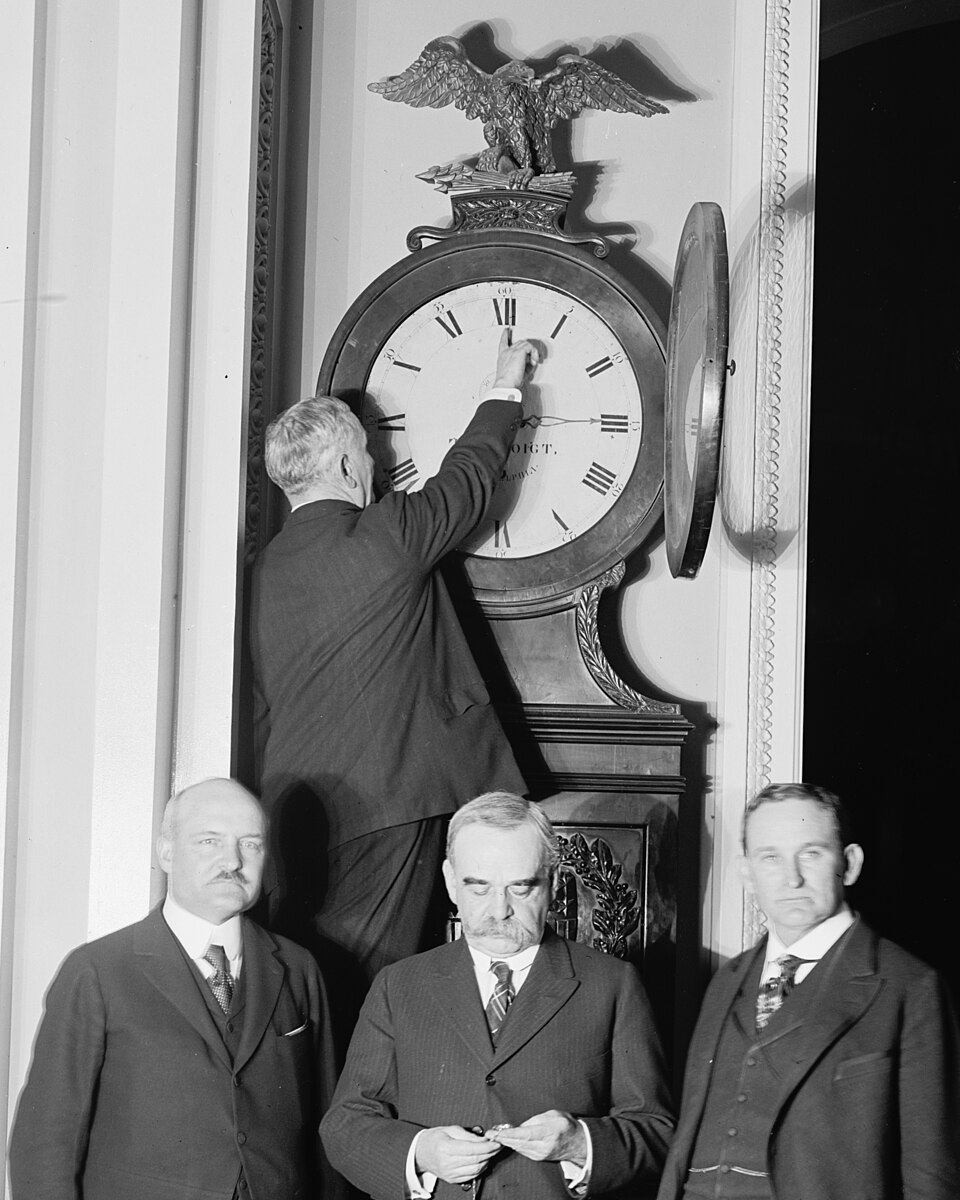
The annual ritual of "springing forward" and "falling back" is a familiar rhythm for most Americans, but have you ever paused to consider when did Daylight Saving Time start in the United States and, more importantly, why? While the practice feels like an ancient tradition, its roots in American law are surprisingly recent, deeply intertwined with the exigencies of a global conflict: World War I.
The Dawn of DST: World War I and the American Experience
The United States officially adopted Daylight Saving Time (DST) on March 19, 1918, when Congress passed the first federal law governing the practice. Titled An Act to Save Daylight and to Provide Standard Time for the United States, this landmark legislation is more commonly known today as The Standard Time Act of 1918. Its primary objectives were twofold: to establish the seasonal clock change and to standardize time across the nation by dividing the country into four distinct time zones — Eastern, Central, Mountain, and Pacific, along with Standard Alaska Time.
The act stipulated that annually, clocks would be moved forward by one hour on the last Sunday in March and set back by one hour on the last Sunday in October. The rationale behind this radical shift was rooted in wartime conservation efforts. With the nation embroiled in World War I, the government sought ways to conserve crucial resources, especially fuel. By shifting daylight hours to the evening, it was believed that the demand for artificial lighting — and thus, the coal and oil needed to generate electricity — would decrease, directly supporting the war effort. This wasn't an isolated American phenomenon; several other countries, including Germany and Great Britain, had already adopted similar "summer time" measures for the very same reason.
Beyond the Battlefields: The Global Roots and Early Ideas of Time Shifting
While World War I provided the impetus for the US to implement DST, the fundamental concept of adjusting clocks to better utilize daylight had been floating around for centuries. One of the earliest proponents, albeit in a whimsical manner, was American polymath Benjamin Franklin. In a satirical essay published in 1784, he suggested Parisians could save money on candles by waking earlier to take advantage of natural light. His musings, though not a serious proposal for a time shift, highlighted the economic potential of daylight optimization.
The more concrete proposals began to emerge in the late 19th and early 20th centuries. In 1895, New Zealand entomologist George Vernon Hudson presented a paper advocating for a two-hour seasonal clock shift. His motivation was personal: to create more daylight hours in the evening for his insect research. Though New Zealand would eventually adopt DST in 1927, the idea was clearly taking root globally.
Across the globe, in England, builder William Willett famously campaigned for "Daylight Saving" in 1907, after noticing how much daylight was "wasted" in the mornings during summer. He proposed advancing clocks by 80 minutes in four 20-minute increments during April and reversing the process in September. While his efforts didn't immediately lead to legislation in Britain, the concept gained traction, eventually influencing wartime policies and leading to its adoption in various European nations before the United States.
A Tumultuous History: Repeals, Reintroductions, and Refinements
Despite its initial adoption for the patriotic cause of WWI, the public's reception to DST was mixed, and its tenure was surprisingly brief. The Standard Time Act of 1918 lasted only about a year and a half before it faced significant opposition. On August 20, 1919, Congress passed an act titled An Act for the Repeal of the Daylight Saving Law. President Woodrow Wilson, a proponent of DST, vetoed the repeal, but Congress overrode his veto, effectively abolishing federal DST. Interestingly, while the clock-changing aspect was repealed, the standardized time zones established by the 1918 law remained permanently in place, a lasting legacy that continues to shape our perception of time today.
The nation's on-again, off-again relationship with DST continued. The practice was reintroduced during World War II as "War Time," again for energy conservation, and then repealed once more in 1945. This period created a confusing patchwork of local ordinances, as states and municipalities could choose whether or not to observe DST, leading to significant inconsistencies in travel and commerce.
The familiar, nationwide daylight saving schedule most Americans follow today originated with the passage of the Uniform Time Act of 1966. This critical legislation aimed to end the chaos of local variations, reintroducing the twice-yearly time change and mandating its observance across the country, while allowing states to opt out if their legislatures chose. Even with this standardization, the journey wasn't smooth. During the 1973 oil embargo, Congress ordered a year-round Daylight Saving Time period from January 1974 to April 1975, hoping to further reduce energy consumption. However, public outcry over dark winter mornings and safety concerns quickly led to its amendment, allowing for a return to standard time during winter months.
The most recent significant tweak came with the Energy Policy Act of 2005, which extended DST by several weeks, shifting its start from the first Sunday in April to the second Sunday in March and its end from the last Sunday in October to the first Sunday in November. This adjustment was again primarily aimed at further conserving energy and reducing electricity usage, demonstrating the enduring, albeit debated, link between DST and resource management.
Debates and Modern Perspectives: Is DST Still Relevant?
The question of when did Daylight Saving Time start often leads to a deeper inquiry: is it still necessary? The original justification for DST, particularly in the U.S. during WWI, centered on energy conservation. However, modern research offers mixed conclusions on this benefit. Some studies suggest marginal energy savings, while others argue that increased use of air conditioning in the evenings, or heating in dark mornings, might offset any gains from reduced lighting needs. The global roots of Daylight Saving Time are complex, reflecting diverse motivations and outcomes.
Today, the debate surrounding DST extends far beyond energy. Critics point to potential negative impacts on public health, citing disruptions to circadian rhythms that can affect sleep patterns, increase the risk of heart attacks, and even contribute to higher rates of traffic accidents in the days following the time change. Businesses, particularly those reliant on consistent scheduling across time zones, also grapple with the logistical challenges. Conversely, proponents argue for the economic benefits of extended daylight in the evenings, pointing to increased retail sales, outdoor recreation, and perceived safety improvements.
Currently, the U.S. remains divided. While most states observe DST, Arizona (with the exception of the Navajo Nation) and Hawaii do not. There's an ongoing national conversation, with some advocating for permanent standard time, others for permanent DST, and legislative efforts periodically emerging to address these preferences. For individuals navigating the time change, practical tips include gradually adjusting sleep schedules in the days leading up to the shift, maintaining consistent sleep hygiene, and maximizing exposure to natural light to help reset your internal clock.
Conclusion
The story of Daylight Saving Time in the U.S. is a fascinating journey from a wartime necessity to a modern-day controversy. Its official start during World War I in 1918 underscores how global events can fundamentally reshape daily life. From its fleeting initial implementation to its tumultuous history of repeals and reintroductions, and finally to its standardized form today, DST reflects an ongoing societal negotiation between efficiency, tradition, and well-being. As debates continue and research evolves, the future of this century-old practice remains an open question, but its origins are firmly etched in the annals of American wartime history.